
Western Province, Rwanda.
Ripe bourbon growing on the fertile slopes.
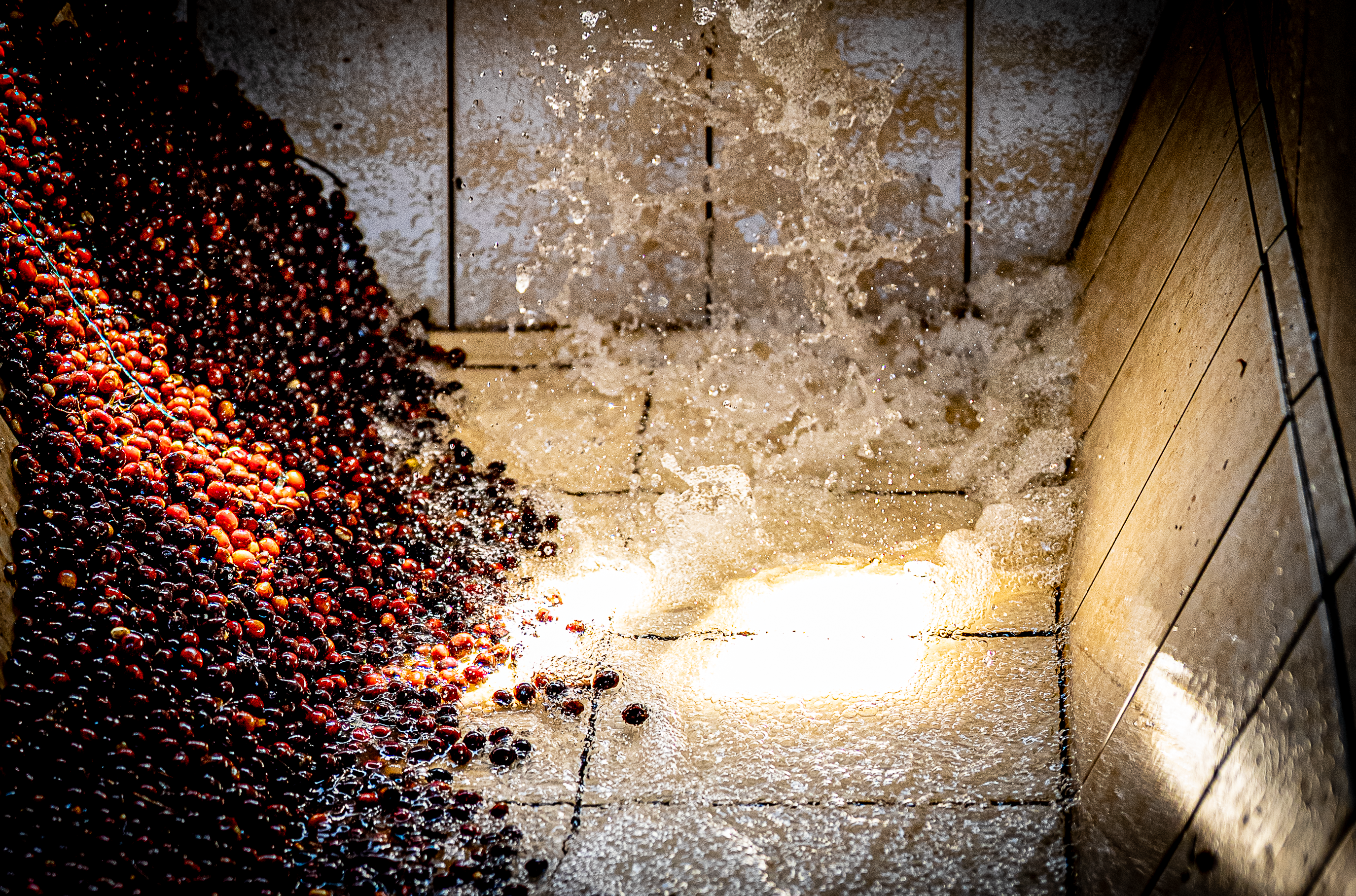
Cherries being carefully selected by farmers before transportation of the day’s pick to the local station for sorting and processing.
Varietals, altitude, terroir — all these things add colour to a coffee's story but it's another crucial stage of production at origin that makes the difference: what happens during processing.
At the end of May I spent a week visiting coffee producers in Rwanda and was reminded just how vital good processing is. Everything leading up to this point plays a part, of course: plant variety, soil quality, climate, altitude, crop management - all contribute to a coffee’s potential. But it's the work carried out immediately after harvesting that determines how much of that potential reaches the cup. The processing shapes a coffee's sweetness, acidity, body and flavour.
Unlike much of Central and South America the processing in Rwanda is done by the local washing station which means these hubs are weather vanes for quality; when we buy in Rwanda we are drawn to washing stations that we trust to do a good job.

As is often the case in East Africa, Rwandan coffee is mainly grown by smallholder farmers, many working plots of just a few hectares or less. These farmers partner with their local washing station, who will themselves partner with an exporter. We’re buying coffees from this region through the Rwanda Trading Company (RTC). Based in Kigali, where their main dry mill and quality lab is also located, RTC work with washing stations across the country.
Kigali is the capital of Rwanda, sitting pretty in the centre of the country and spreading out over rolling hills and valleys. Lots of green space; it’s a modern city that’s easy to navigate. I arrive on a Sunday morning and there’s a welcoming buzz from the proud and friendly residents - it proves to be the perfect place to acclimatise and plan the week ahead.

Over the course of the following five days we visit washing stations across Southern and Western Rwanda. Heading south west from Kigali the first station is Kageyo, which sits along a ridge at around 2000 metres, they're processing washed and natural coffees here. Next is Byimana, we arrive at the end of the day with the light fading but there are still farmers delivering cherry for processing.
In the evening I stay in Huye Town, also known as Butare; arriving at night and leaving early I see only glimpses of this historical centre. From Huye we continue to head south west Through Nyungwe forest and then towards Lake Kivu, which forms a natural border between Rwanda and the Democratic Republic of Congo. Most of the production we see is in this area and over the next two days we travel extensively in these highlands to the east of Kivu. Here we visit Cyiya, Gaseke, Gitwe, Impano, Kirambo, Mutovo and Nyungwe High.
As expected the majority of the coffee is washed but there were also naturals, honeys and anaerobics. In this respect the processing in Rwanda has changed a lot. In pursuit of quality the government originally specified all Rwanda's coffee had to be prepared using the washed process. Nowadays producers here are allowed to process their coffee however they like - there was great quality across the board.

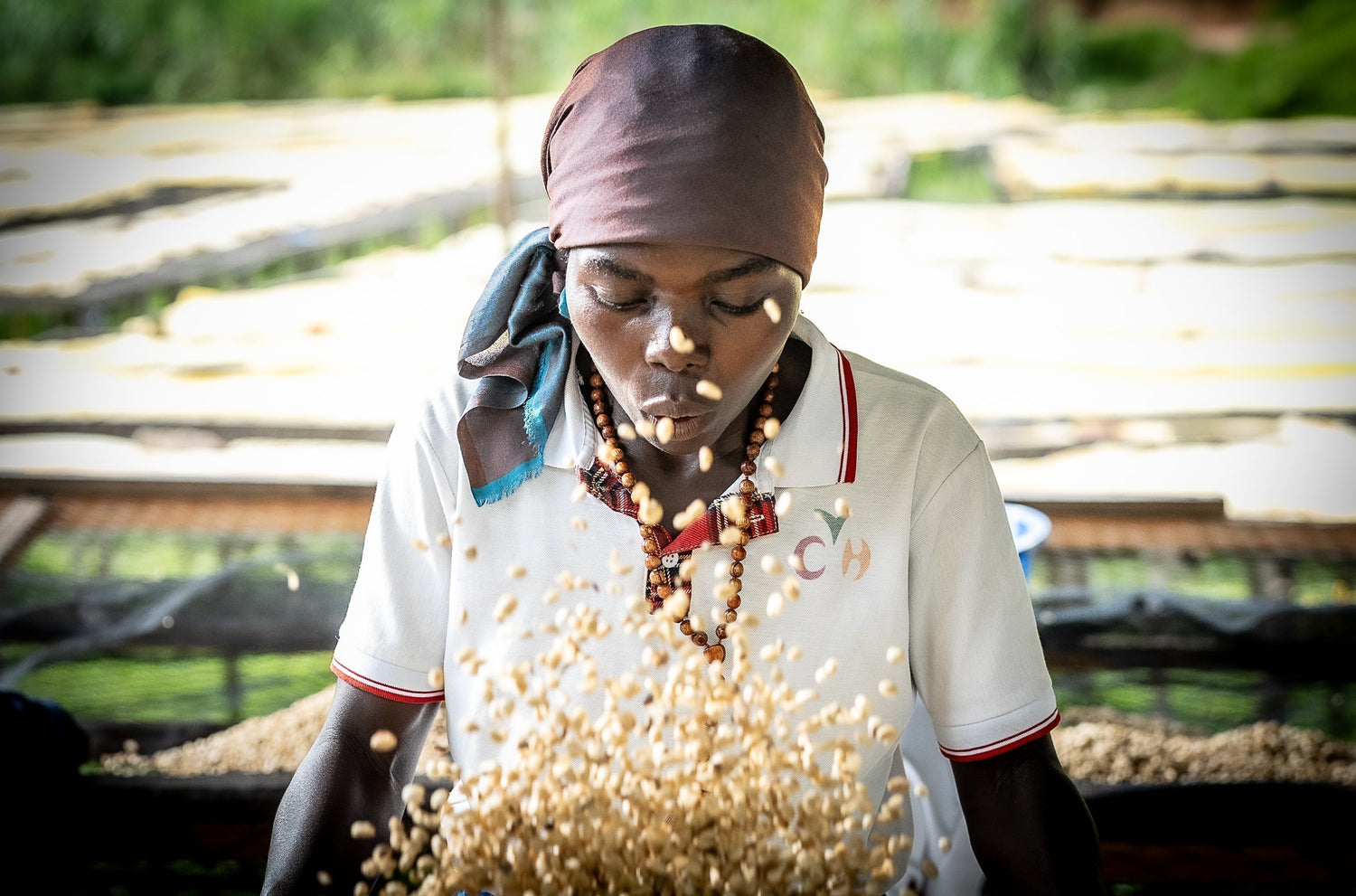
The harvest was in full swing and the stations I visit are all busy receiving fresh deliveries of ripe cherry to wash, sort, process and dry. Drying tables are arranged on slopes to face the sun. These tables or 'raised beds' are full of cherry and parchment being checked and turned. It's incredible to get a greater understanding of what happens at the different stations, the challenge and the thrill is to connect these insights to what we're tasting on the cupping table.