
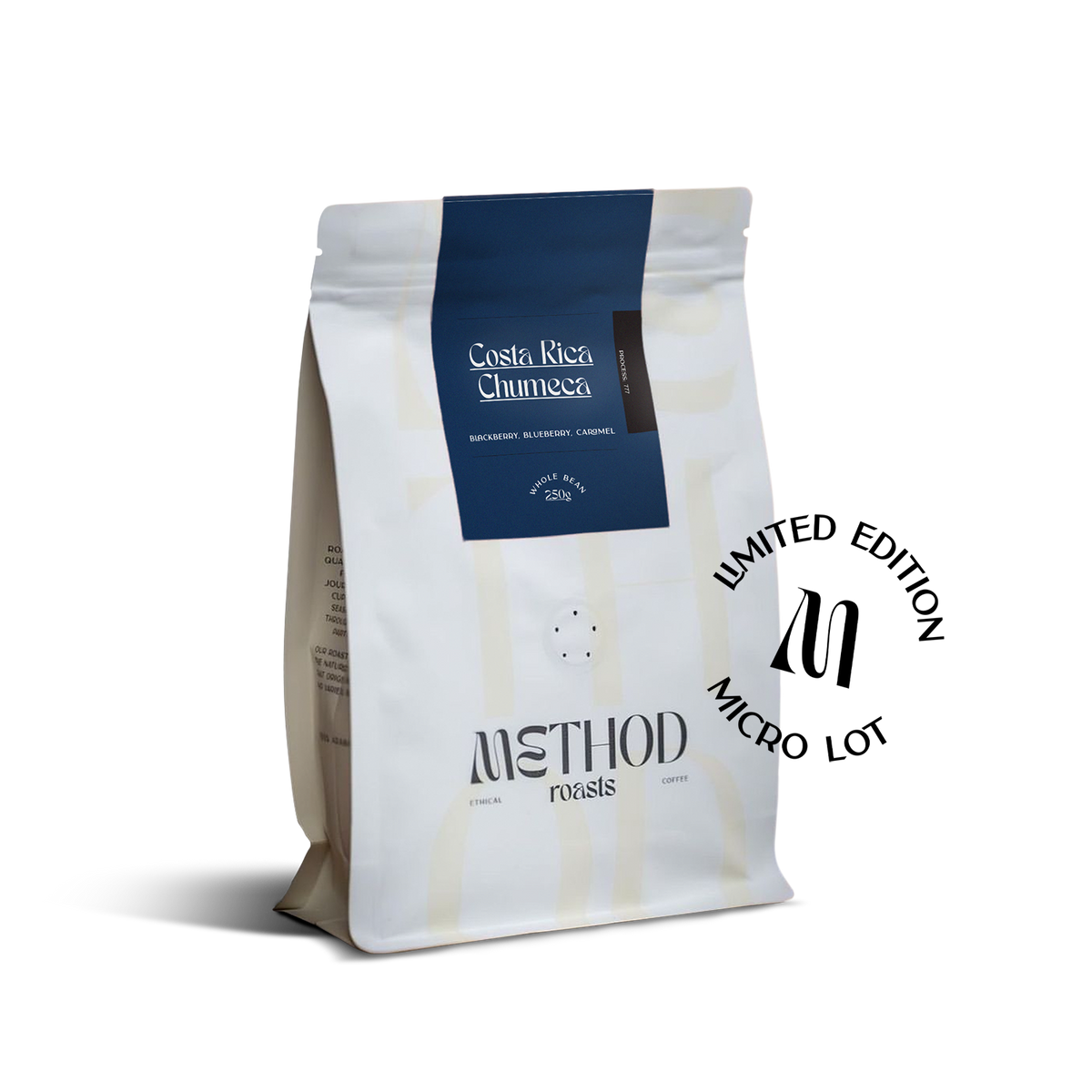
Costa Rica - Chumeca

Sale price£17.00

This naturally processed coffee showcases one of Costa Rica’s most innovative micro-mills.


TASTING NOTES:

La Chumeca’s signature ‘777’ process delivers remarkable aromatics, juicy acidity and layers of tropical fruit.

Grind Type: Whole Beans

Grind Type

Bag Size: 250g

Bag Size

PRODUCER

Martín Ureña and family

REGION

San Pablo de León Cortés, Tarrazú

HARVEST

December - March

ALTITUDE

1500 - 1800 MASL

VARIETY

Catuai

PROCESS

777


ABOUT

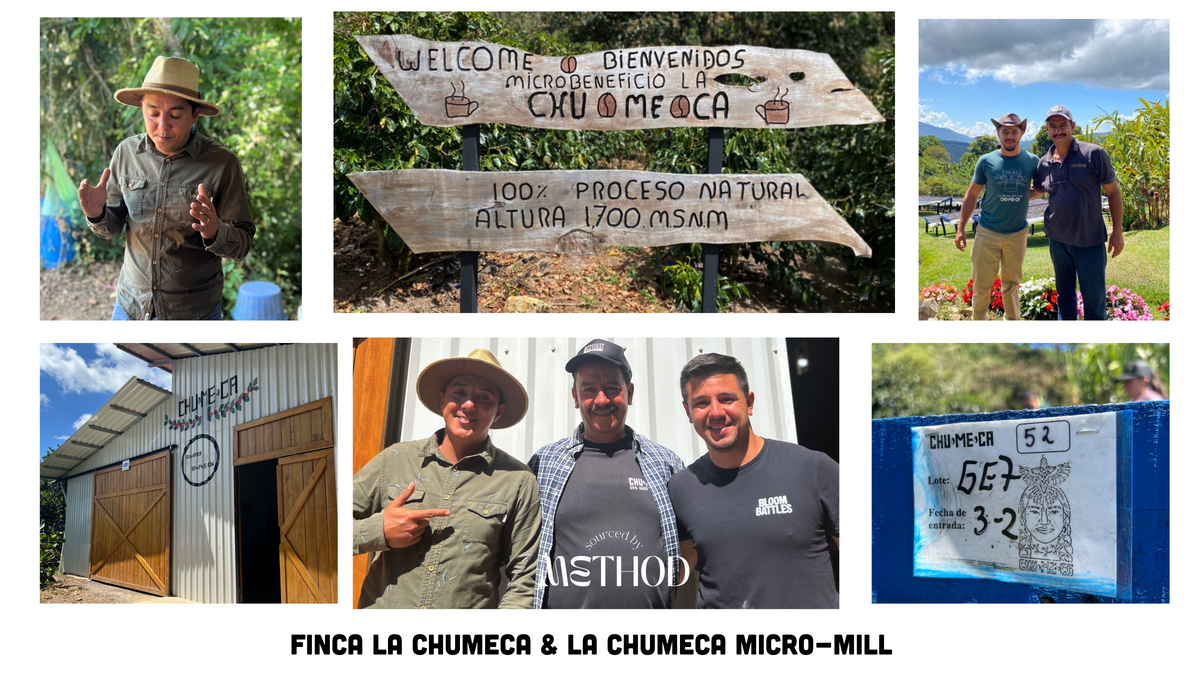
Martin Urena and his family at La Chumeca have been farming coffee for generations; he belongs to the fourth generation and along with his two sons they produce incredible micro-lots.

Processing everything on their farms as naturals; they’re very small scale producers who are fully focused on the highest quality speciality coffee. With such small scale production, coffees from La Chumeca sell out very quickly every year - we’re thrilled to be able to share some with you for the first time. 

This lot was produced using their signature 777 natural process that is carried out over two stages: The first phase is oxidation in open orange bags, then into sealed stainless steel containers for the second anaerobic part.

The results are an incredibly complex cup that has lots of juicy acidity and layers of tropical fruits to finish - yum!

La Chumeca

'La Chumeca' was created in 2014 and the farm is an expression of the Urena family's ideology: To produce and process coffee with the highest quality standard while being eco-friendly.

They only produce naturals here, with varying styles of fermentation, which are then sundried on raised beds on the slopes above the tasting room. They do not use adjuncts or any additional infusions, instead understanding the dynamics between temp, time, pH, Brix, and oxygen through the use of stainless-steel barrels, coloured bags and cupping. 

The fermentation experiments started in 2016, and have incorporated their own observation with research from the Agronomic University of Costa Rica to understand the processes and controls. Their current project aims to understand the differences in cherry colour. 777 is a processes involving a mix of aerobic and anaerobic fermentations.

Costa Rica Coffee Production

Costa Rica has grown coffee since the early 19th century when its government encouraged the growth of the industry. Between 1846 and 1890, coffee was the country’s only export with the majority ending up in England leading to the establishment of the Anglo-Costa Rican bank in 1863 which helped to finance the industry. 

Coffee financed much of Costa Rica’s culture and infrastructure such as the National Theatre and the very first railways. During this period Costa Rica established itself as a leading quality-focused coffee producing country. Over time higher yielding coffee varietals gained popularity overthe more complex ‘heirloom’ plants. The quality of the cup profile in Costa Rican coffees suffered. Large wet mills (developed by big brands) bought up and blended the coffee from small farms, this meant these smaller lots lost their identity – in both name and the cup.

Micro Mills and Boutique Lots

Things started to change in the early 2000s, there is still volume production but Costa Rica has also become well known for producing smaller boutique lots, where the coffee has been grown, picked and processed at the farm.

The so called micro-mill system started around twenty years ago when Costa Rica re-invented itself as a producer of speciality, micro-lot coffees. The change was made possible by the advent of small scale coffee processing equipment that was able to operate with very little water - the eco-pulper became widespread and there was a boom in smaller scale farming where growers were able to invest in their own equipment, install it at the farm and sell coffee direct to coffee roasters like us.